- By European Physio Team
- 3 min read
Decompression Table Therapy
Spinal decompression table: a solution for back pain
Back pain is a common problem affecting millions of people worldwide. While there are several ways to manage it, one of the most effective is through the use of a spinal decompression table. This therapy uses traction to stretch the spine, relieve pressure, and promote healing. In this blog, we will discuss what a spinal decompression table is, how it works, and its numerous benefits.
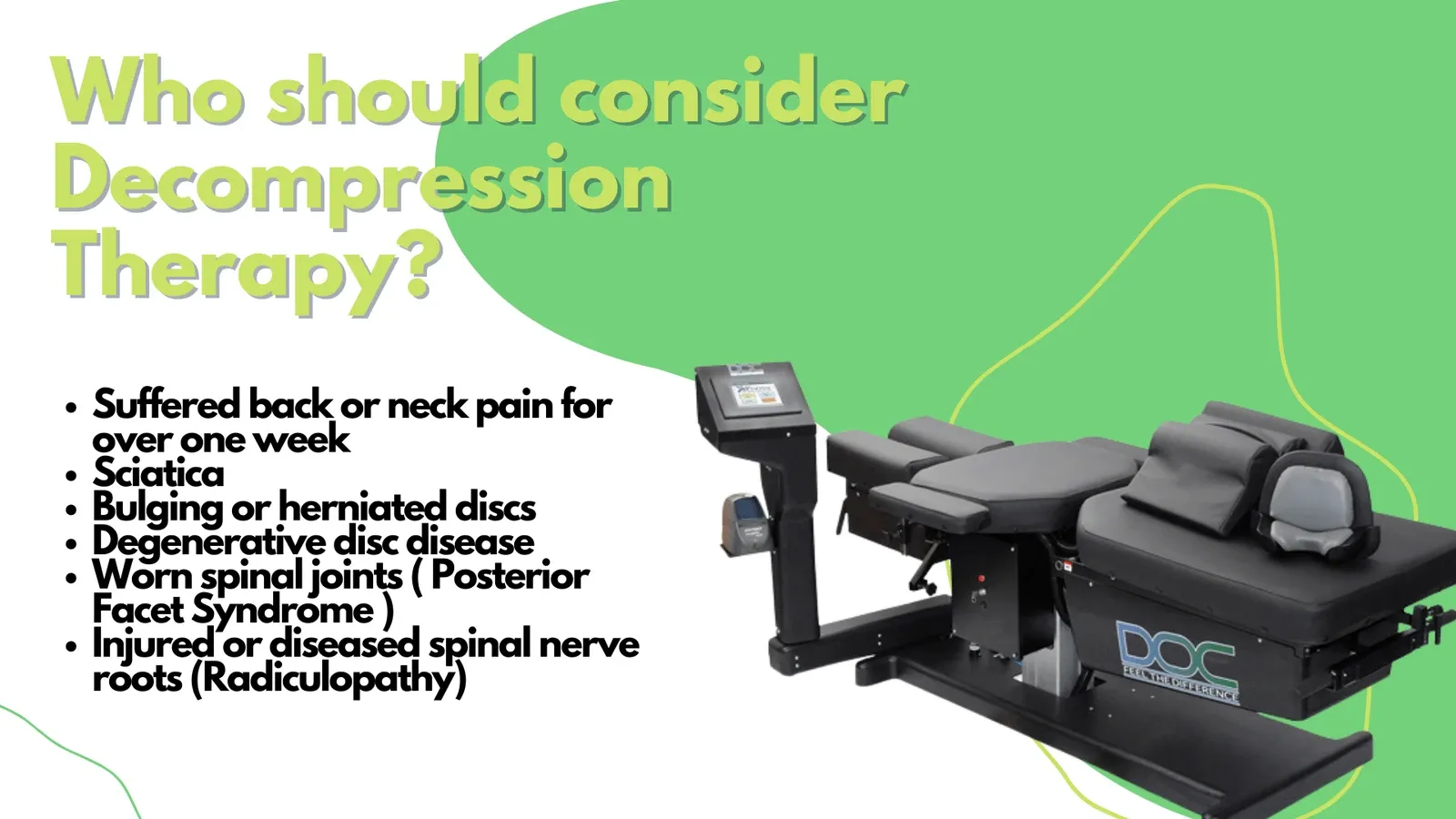
Who should consider decompression therapy?
You may want to consider decompression therapy if you have:
- Suffered back or neck pain for over one week
- Sciatica
- Bulging or herniated discs
- Degenerative disc disease
- Worn spinal joints (posterior facet syndrome)
- Injured or diseased spinal nerve roots (radiculopathy)
What is a spinal decompression table?
A spinal decompression table is a specialized medical device designed to relieve back pain. It uses traction to stretch the spine and reduce pressure on the vertebrae and discs. The table is equipped with a motor that can be controlled to adjust the amount of traction applied to the spine. The patient lies down on the table and is secured with straps, which help to keep them in place during the therapy session.
How does spinal decompression work?
The spinal decompression table works by creating a negative pressure within the discs, which helps to pull the herniated or bulging discs back into their proper position. As the spine is stretched, the pressure on the discs is reduced, and the discs are able to rehydrate, which promotes healing. Over time, this can lead to a reduction in pain and an improvement in mobility.
What happens when a disc is under pressure
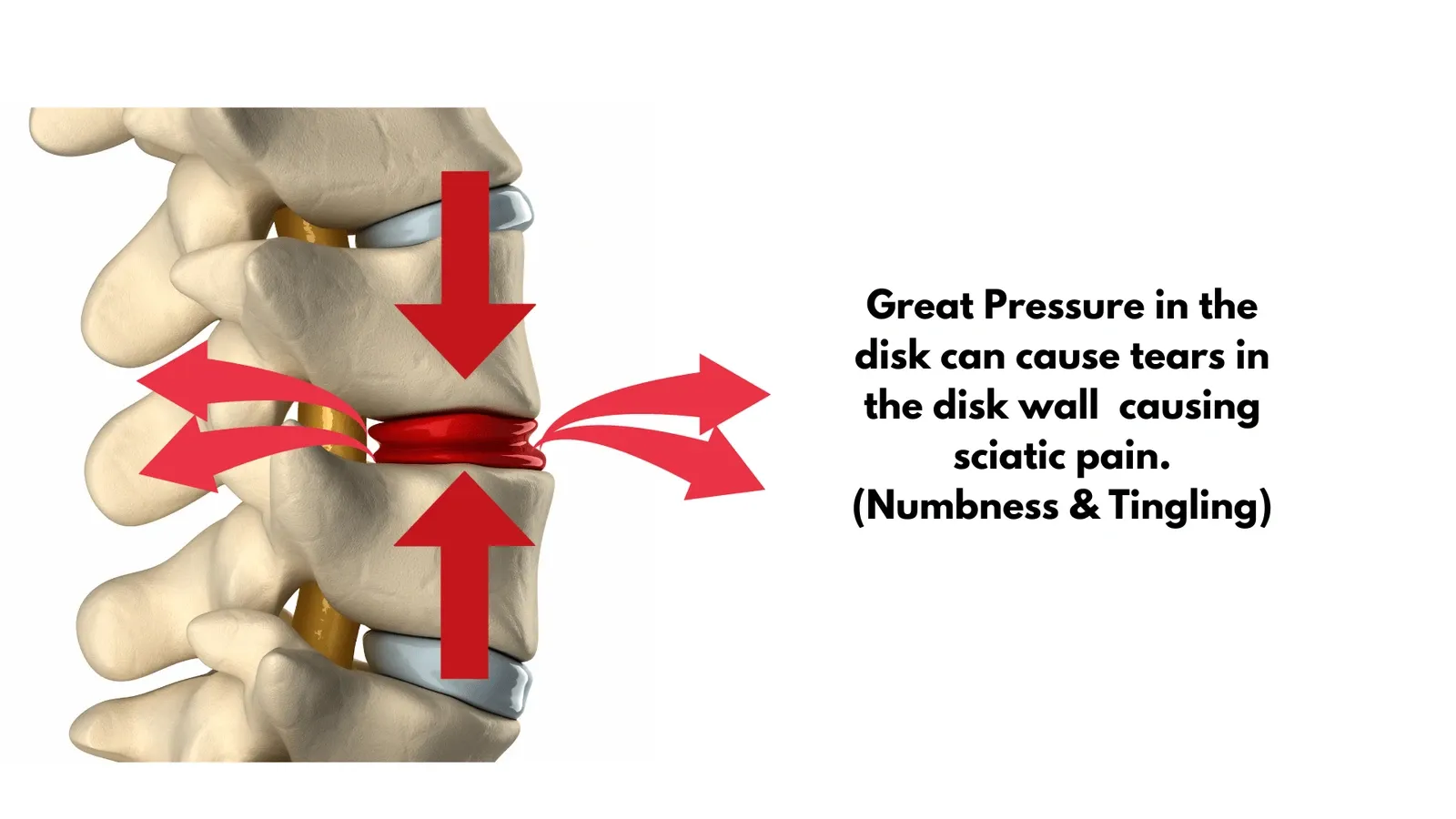
Great pressure in a disc can tear the disc wall and cause sciatic pain, which you may feel as numbness and tingling. In the diagram, the arrows above and below the red disc show it being squeezed, and the arrows pointing outward show the disc wall being pushed out.
What happens during a decompression table session
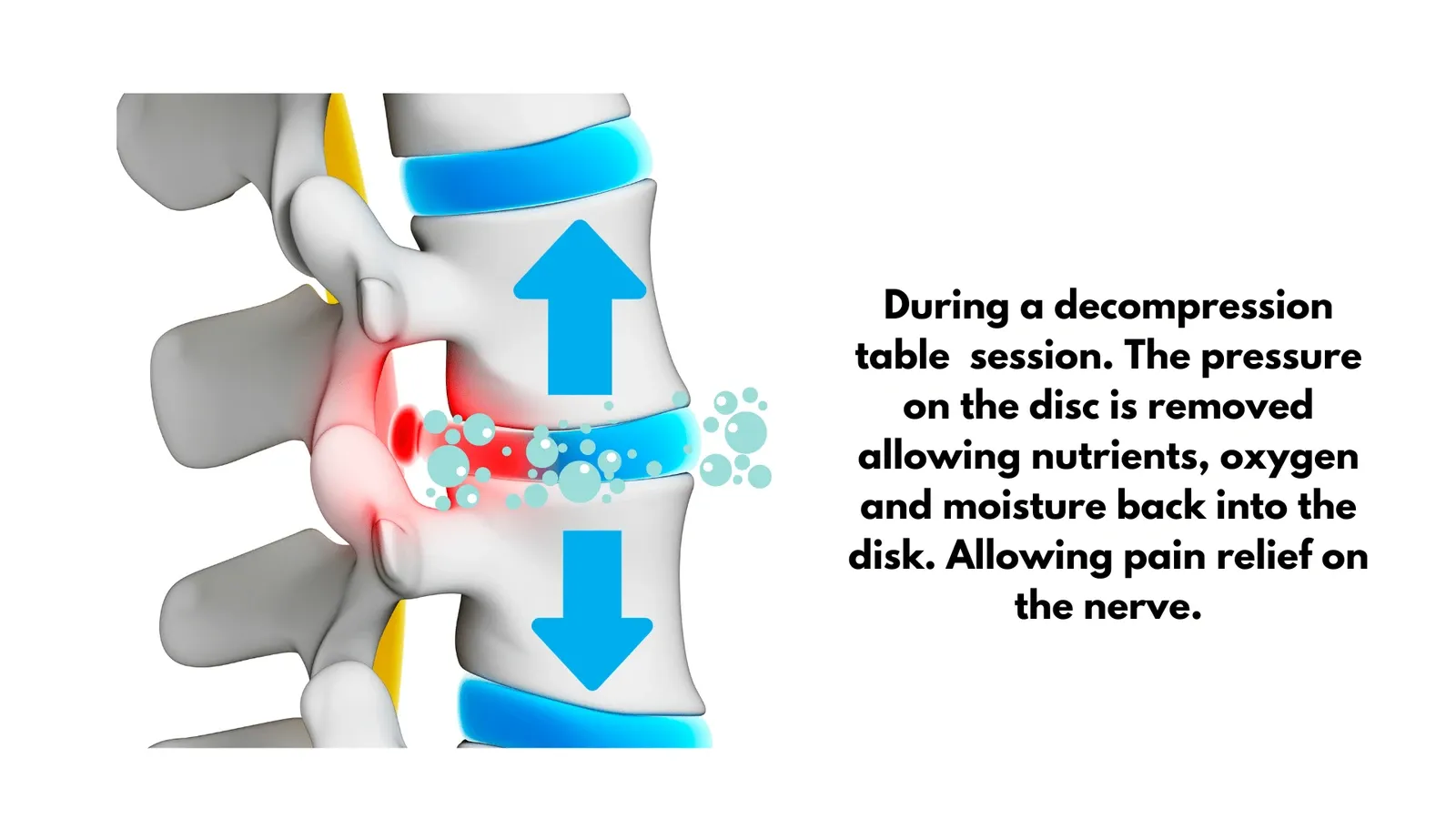
During a decompression table session, the pressure on the disc is removed. This lets nutrients, oxygen and moisture back into the disc, allowing pain relief on the nerve. In the diagram, the arrows pointing up and down show the spine being stretched apart, and the bubbles show nutrients, oxygen and moisture moving into the disc.
Benefits of a spinal decompression table
- Relief from back pain: Spinal decompression therapy has been shown to be effective in reducing back pain caused by herniated discs, bulging discs, sciatica, and other conditions.
- Non-invasive: Unlike surgery, spinal decompression is non-invasive and does not require any incisions or anesthesia.
- Safe: Spinal decompression is considered a safe form of therapy with minimal side effects. It is also a low-risk alternative to surgery.
- Improved mobility: As the pressure on the discs is reduced, patients can experience improved mobility, allowing them to move more freely and with less pain.
- Long-term results: Unlike medications that only provide temporary relief, spinal decompression can lead to long-term results, reducing the need for ongoing treatment.
In conclusion, a spinal decompression table is a safe and effective way to manage back pain. It offers numerous benefits, including relief from pain, improved mobility, and long-term results. If you are suffering from back pain, consider spinal decompression therapy as a potential solution.
Note: It is important to consult with a medical professional before starting any form of therapy to ensure that it is safe and appropriate for your specific condition. Call and book a free consultation with one of our physiotherapists!
More from the blog
-
TMJ Relief
TMJ, or temporomandibular joint disorder, is a common condition that can cause pain and discomfort in the jaw and face.
-
Plantar Fasciitis Treatment
Are you feeling like you’ve got a rock in your shoe, even when you’re not wearing any? Do you dread getting out of bed in the morning because of that sharp pain in your heel?
-
Relieve Carpal Tunnel Syndrome
Have you ever felt tingling, numbness, electrical currents, burning or a combination of all sensations in your fingers or hands?