- By European Physio Team
- 4 min read
Relieve Carpal Tunnel Syndrome

Have you ever felt tingling, numbness, electrical currents, burning or a combination of all sensations in your fingers or hands?
Has the feeling persisted over months and is it getting worse?
Carpal tunnel starts out slowly and gradually. You may feel numbness and weakness in your fingers and hands. Carpal tunnel is a painful condition that usually gets worse over time if left untreated. Untreated carpal tunnel can lead to permanent nerve damage.
Carpal tunnel syndrome is a disorder that affects the hand, wrist, and arm caused by pressure on the median nerve in the wrist. It can cause pain, numbness, and tingling in the fingers and thumb, as well as weakness in the hand. Early signs of carpal tunnel syndrome can include pain, tingling, or “pins and needles” sensations in the palm, thumb, index and middle fingers, as well as aching, burning, and numbness in the wrist.
Physiotherapy is an important part of treatment for carpal tunnel syndrome. Physiotherapists can assist in the diagnosis and management of carpal tunnel syndrome through patient education, activity modification, and exercise. Education is key to understanding carpal tunnel syndrome and avoiding activities that can worsen symptoms.
Activity modification involves changing the way a patient does certain activities to reduce the pressure on the median nerve. For example, a patient may be taught to use ergonomic tools such as wrist splints or ergonomic keyboards to reduce pressure on the median nerve. Exercise is also an important part of carpal tunnel syndrome treatment. Physiotherapists can prescribe exercises to improve range of motion, strength, and flexibility in the wrist, hand, and arm. These exercises can help reduce pain and improve muscle control in the affected area.
In addition to physiotherapy, other treatments may include medication, surgery, or a combination of the two. Medication may include anti-inflammatories, pain medications, or corticosteroids. Surgery can help relieve pressure on the median nerve and is usually recommended for severe cases of carpal tunnel syndrome.
If you are experiencing symptoms of carpal tunnel syndrome, seek help from a physiotherapist. They can help diagnose and manage the condition, as well as provide guidance on activity modification and exercise. Early treatment can help reduce the severity of symptoms and prevent further damage to the median nerve.
Relieve symptoms of carpal tunnel with these stretches and exercises
Try these exercises at home, or ask your physiotherapist to show you how to do them properly. Just remember: slow and steady wins the race. Don’t push yourself too hard, and listen to your body. If you were unable to do the modality due to increased pain, stop immediately. If pain increases, contact your physiotherapist or physician. If you have any questions, call us for a free consultation with one of our physiotherapists.
Here are four exercises to try: two range of motion exercises, then two stretches.
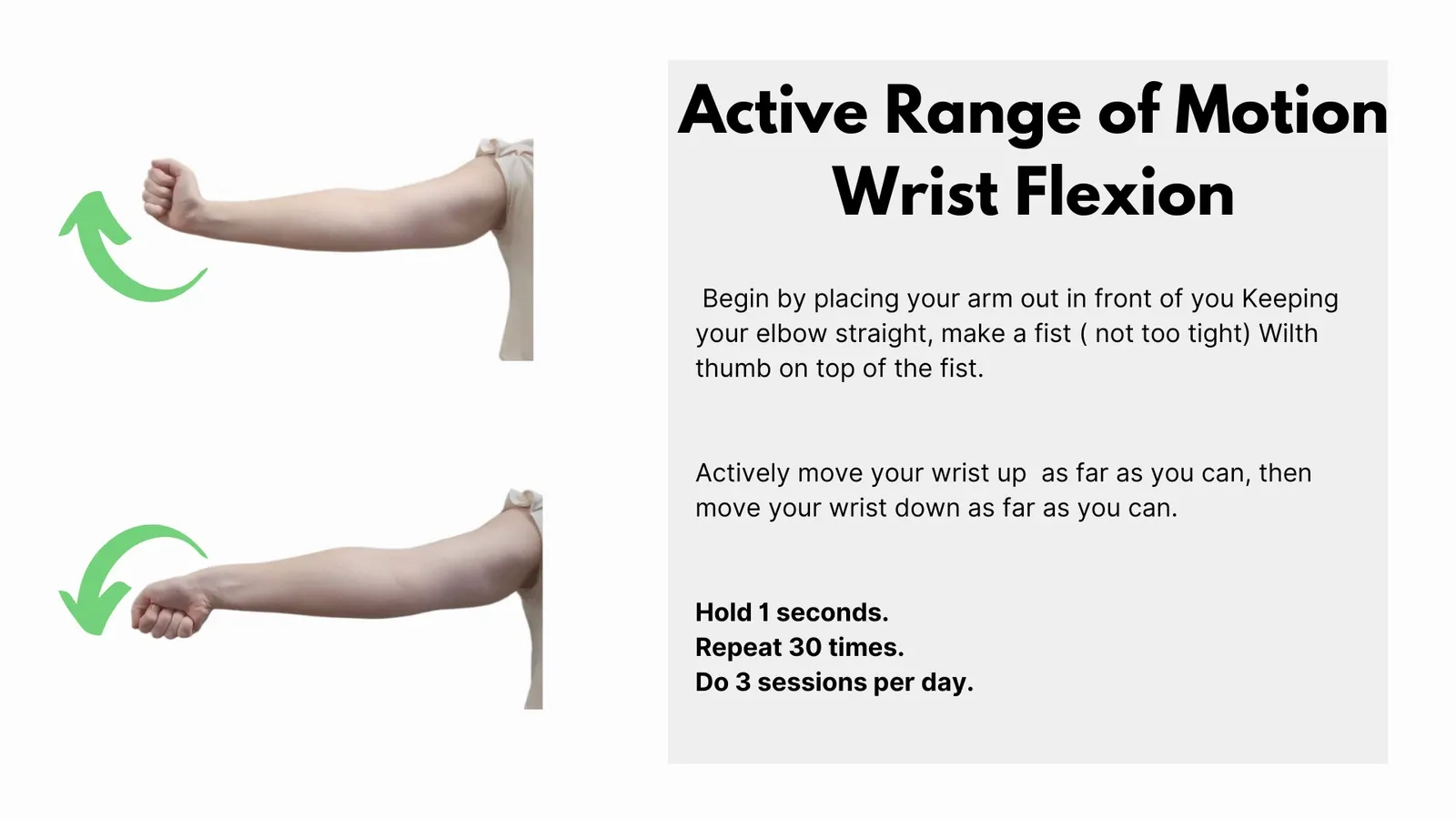
Active range of motion: wrist flexion
- Begin by placing your arm out in front of you.
- Keeping your elbow straight, make a fist (not too tight) with your thumb on top of the fist.
- Actively move your wrist up as far as you can, then move your wrist down as far as you can.
Hold for 1 second. Repeat 30 times. Do 3 sessions a day.
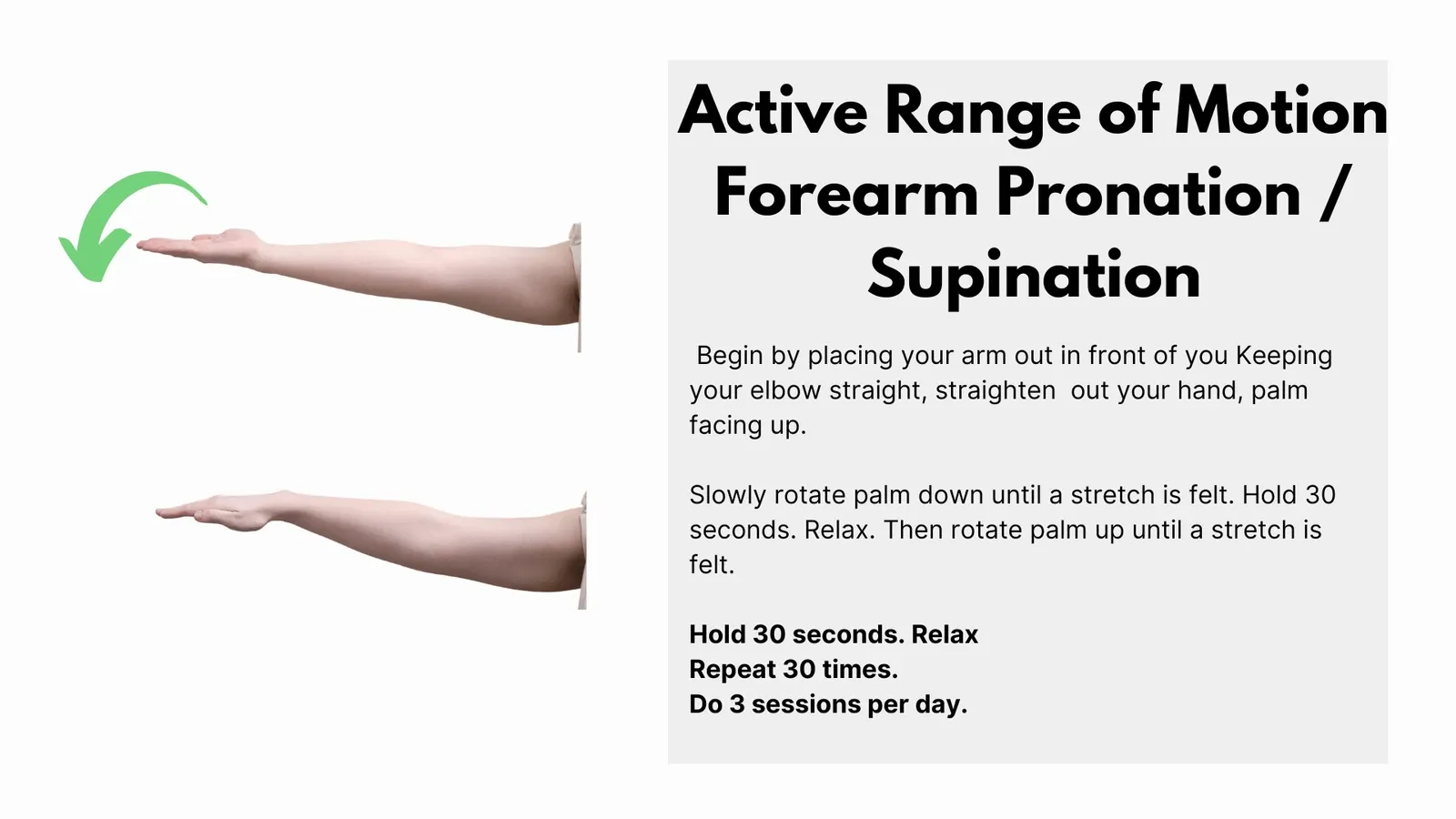
Active range of motion: forearm pronation and supination
- Begin by placing your arm out in front of you.
- Keeping your elbow straight, straighten out your hand, palm facing up.
- Slowly rotate your palm down until you feel a stretch. Hold for 30 seconds, then relax.
- Then rotate your palm up until you feel a stretch.
Hold 30 seconds, then relax. Repeat 30 times. Do 3 sessions a day.
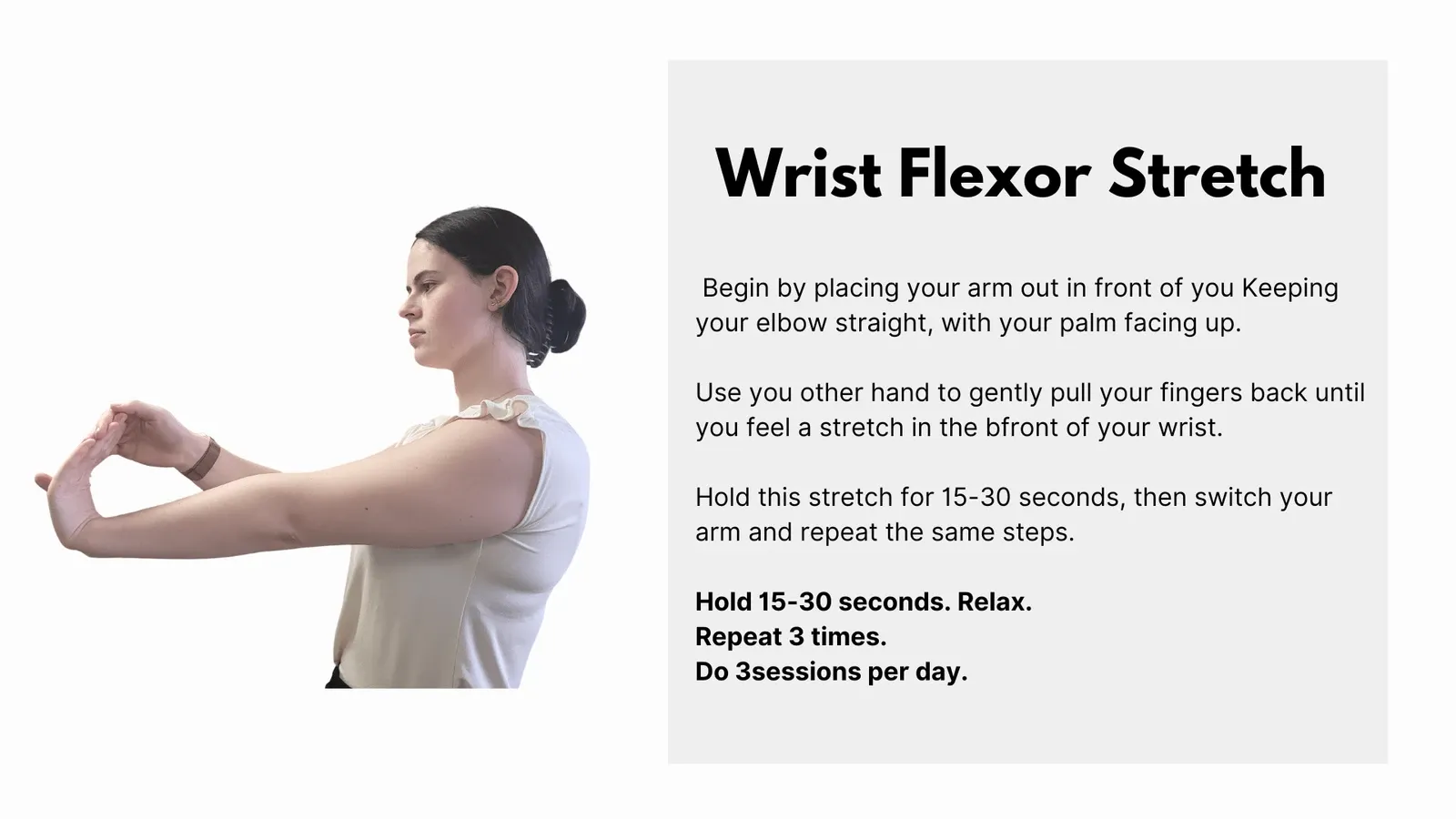
Wrist flexor stretch
- Begin by placing your arm out in front of you.
- Keeping your elbow straight, turn your palm to face up.
- Use your other hand to gently pull your fingers back until you feel a stretch in the front of your wrist.
- Hold the stretch, then switch arms and repeat the same steps.
Hold 15–30 seconds, then relax. Repeat 3 times. Do 3 sessions a day.
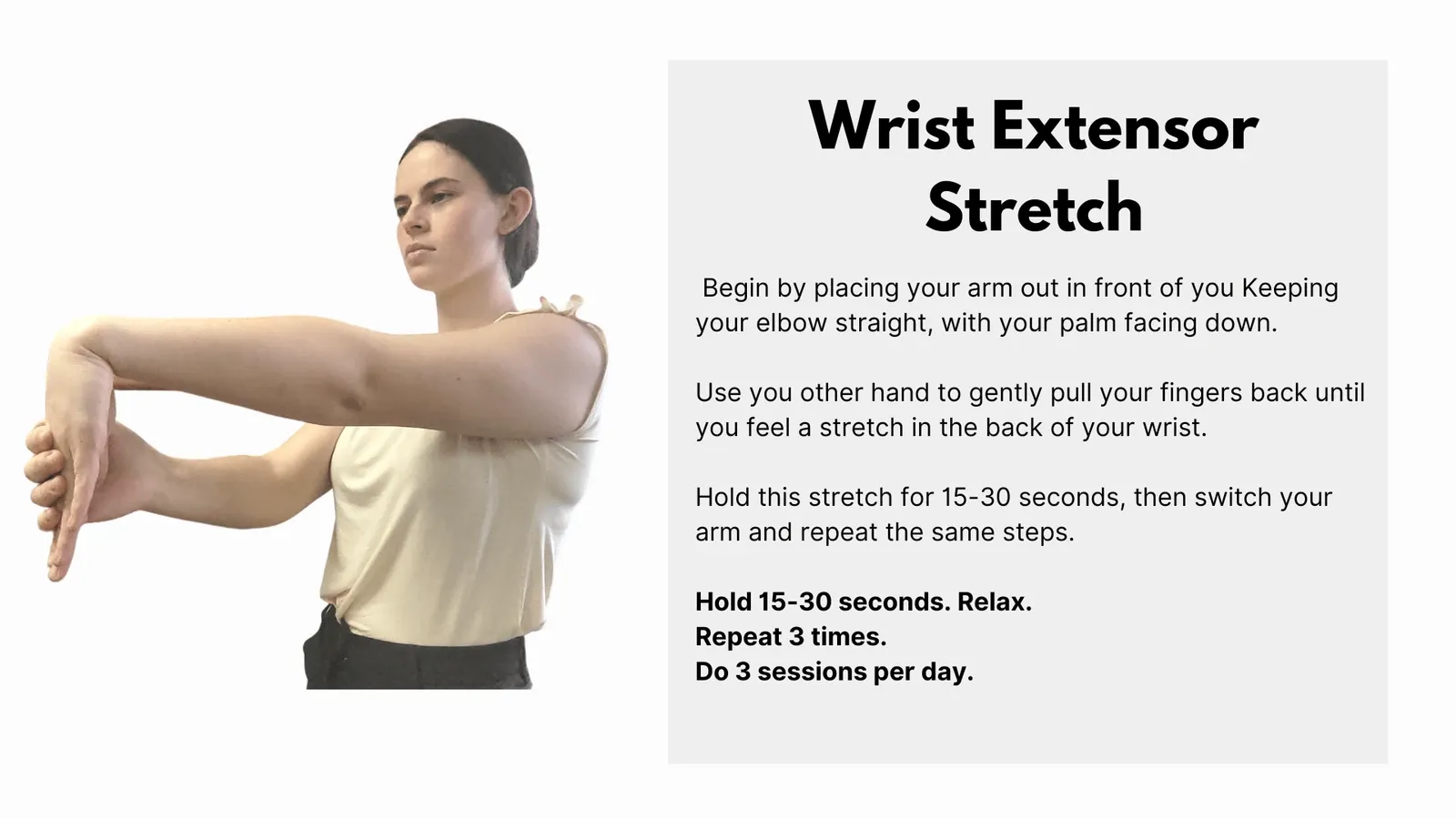
Wrist extensor stretch
- Begin by placing your arm out in front of you.
- Keeping your elbow straight, turn your palm to face down.
- Use your other hand to gently pull your fingers back until you feel a stretch in the back of your wrist.
- Hold the stretch, then switch arms and repeat the same steps.
Hold 15–30 seconds, then relax. Repeat 3 times. Do 3 sessions a day.
More from the blog
-
TMJ Relief
TMJ, or temporomandibular joint disorder, is a common condition that can cause pain and discomfort in the jaw and face.
-
Plantar Fasciitis Treatment
Are you feeling like you’ve got a rock in your shoe, even when you’re not wearing any? Do you dread getting out of bed in the morning because of that sharp pain in your heel?
-
Decompression Table Therapy
Back pain is a common problem affecting millions of people worldwide. While there are several ways to manage it, one of the most effective is through the use of a spinal decompression table.