- By European Physio Team
- 5 min read
Text Neck Pain
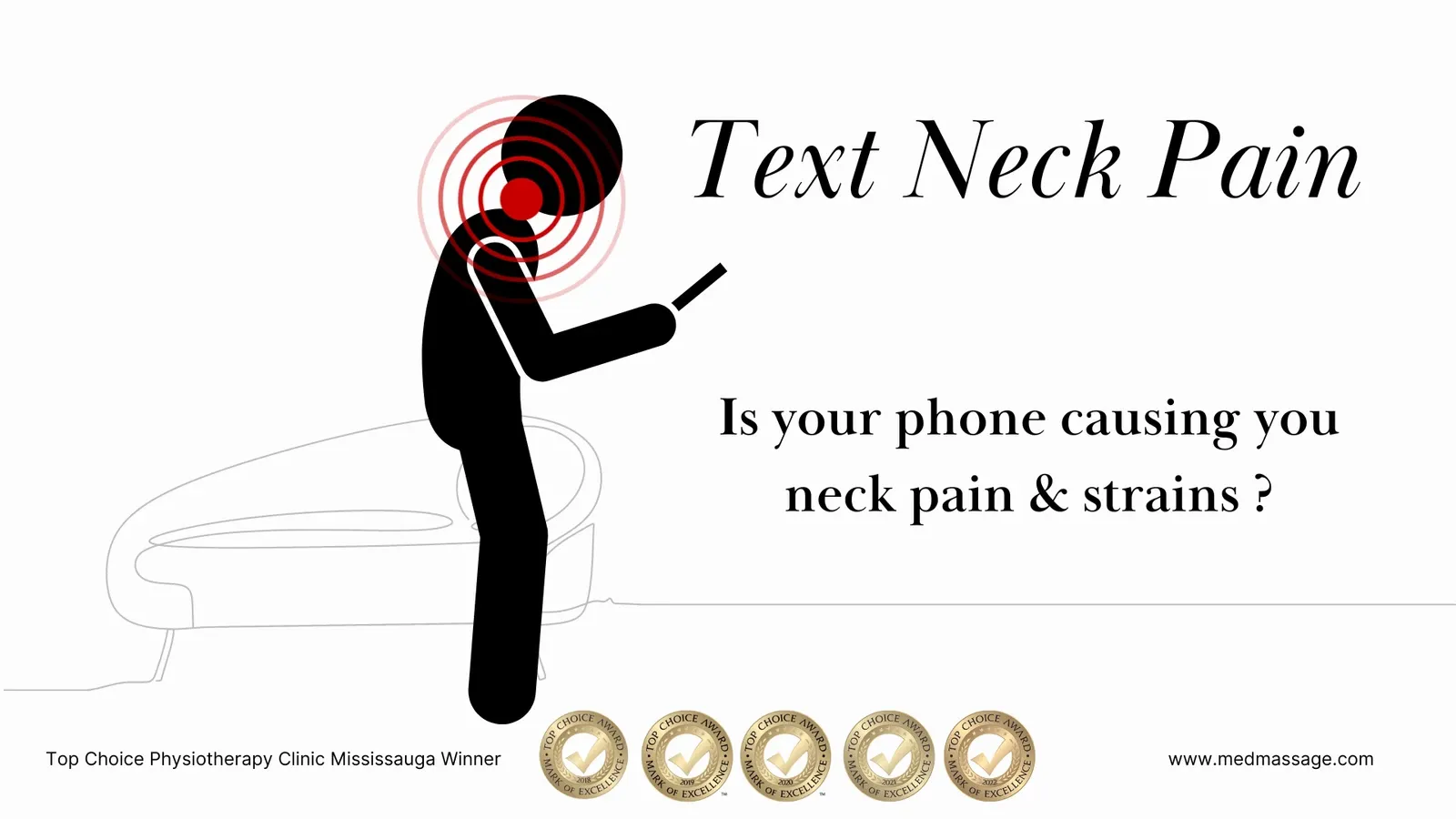
Are you constantly hunched over looking down on your phone or other devices and feeling the pains and strains in your neck?
What is text neck?
Text neck pain is a real symptom. Our head is the heaviest part of the body and the muscles and ligaments are not designed to hold it for long periods of time in a position where you are looking down.
When you lean forward while using your cell phone for prolonged periods of time, this is a form of repetitive strain injury that causes neck and shoulder pain that can lead to tension headaches in some cases.
Text neck is a lifestyle problem that can be treated by a physiotherapist.
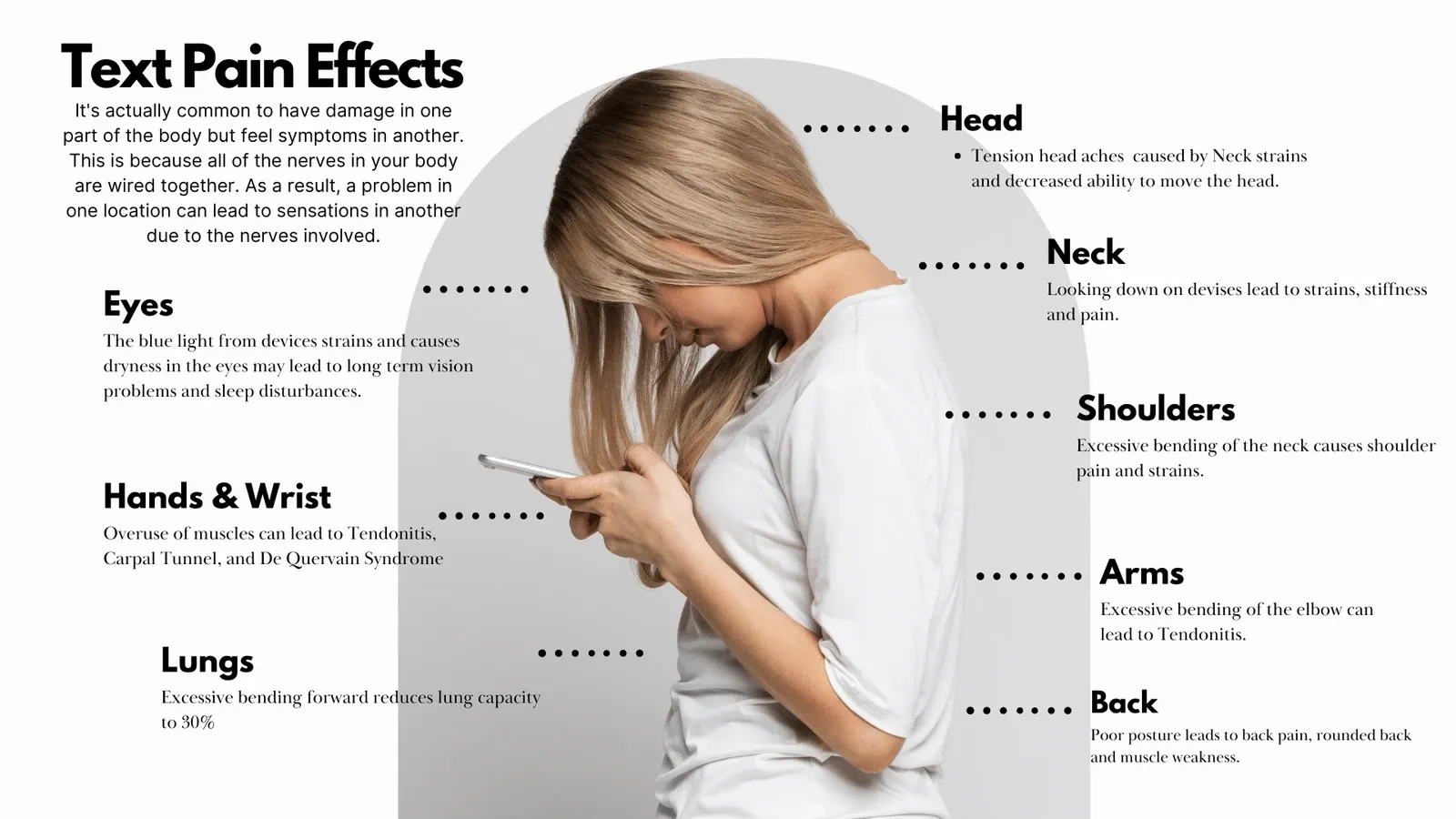
How text neck can affect the rest of your body
It’s actually common to have damage in one part of the body but feel symptoms in another. This is because all of the nerves in your body are wired together, so a problem in one place can lead to sensations somewhere else.
Here’s how looking down at your phone for long periods can affect each part of your body:
- Head. Neck strains and a decreased ability to move your head can cause tension headaches.
- Neck. Looking down at your devices leads to strains, stiffness and pain.
- Shoulders. Bending your neck too much causes shoulder pain and strains.
- Arms. Bending your elbows too much can lead to tendonitis.
- Hands and wrists. Overusing the muscles can lead to tendonitis, carpal tunnel and De Quervain syndrome.
- Back. Poor posture leads to back pain, a rounded back and muscle weakness.
- Lungs. Bending forward too much reduces lung capacity to 30%.
- Eyes. The blue light from devices strains your eyes and causes dryness, which may lead to long-term vision problems and sleep disturbances.
Tips and tricks to prevent text neck pain
Raise the phone. Move the phone (and other devices) up closer to eye level so the head does not have to be tilted forward.
Take frequent breaks. Take frequent breaks from looking down on your phone.
Watch your posture. With your chin tucked in and shoulders pulled back, this keeps the body aligned in a neutral position.
Arch and stretch. Arch the neck and upper back backward periodically to ease muscle pain.
Stretch and exercise regularly. A strong, flexible back and neck are more able to handle extra stress.
Best stretches for neck pain
You may not be able to completely eliminate looking down at your phone or other devices, but we have compiled exercises you can perform that will help relieve some of the pain and tension placed on your neck, back and shoulders.
Here are three exercises to try: chin tucks, neck stretches, and a chest and shoulder stretch.
Chin tucks
Chin tucks are typically one of the key exercises recommended for keeping the head aligned above the spine, rather than drifting forward into poor posture. When done regularly and with proper form, chin tucks can help improve the neck’s strength, flexibility, and function.
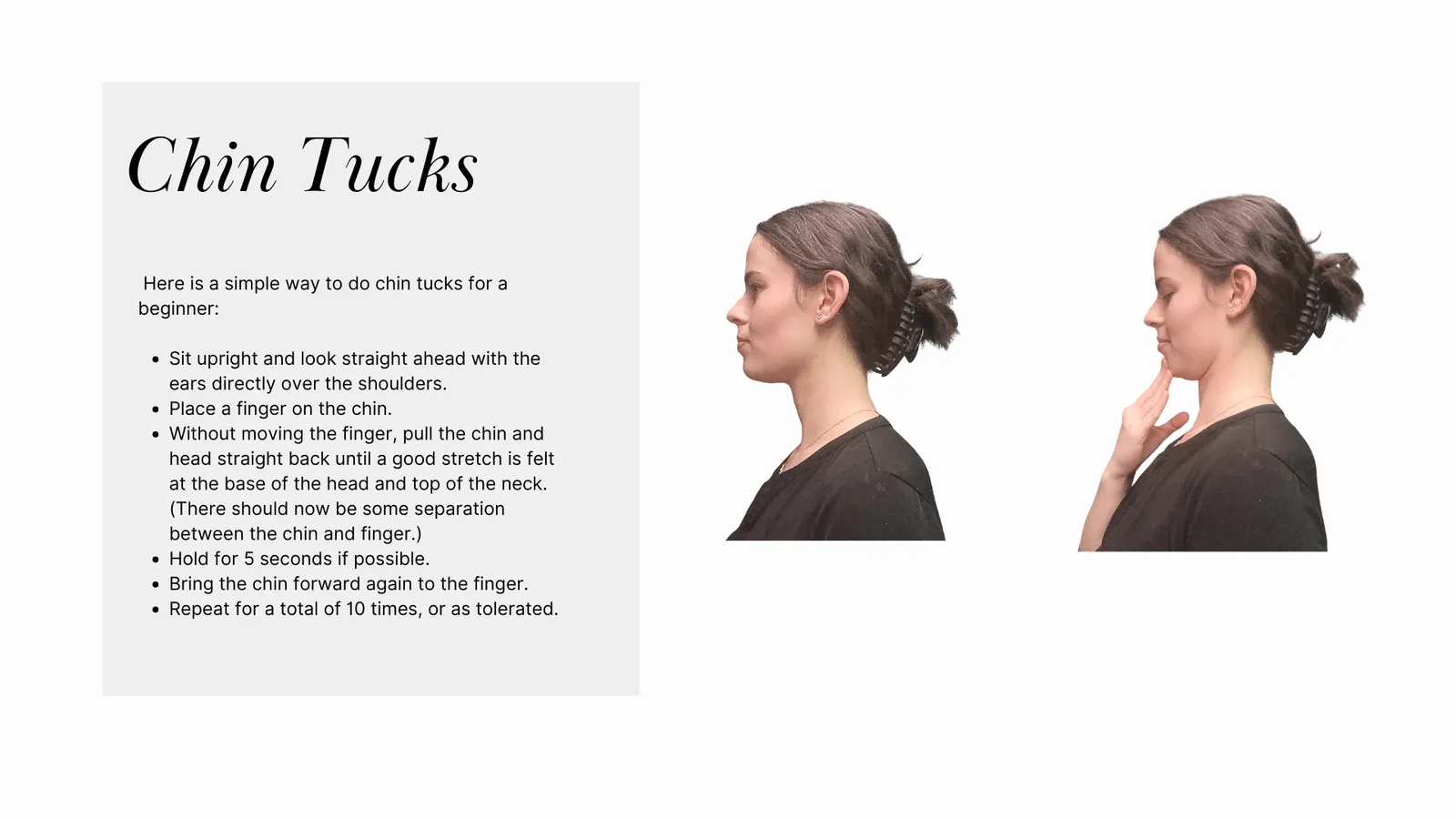
Here is a simple way to do chin tucks if you’re a beginner:
- Sit upright and look straight ahead, with your ears directly over your shoulders.
- Place a finger on your chin.
- Without moving your finger, pull your chin and head straight back until you feel a good stretch at the base of your head and the top of your neck. There should now be some space between your chin and your finger.
- Hold, then bring your chin forward again to your finger.
Hold 5 seconds if possible. Repeat 10 times, or as tolerated.
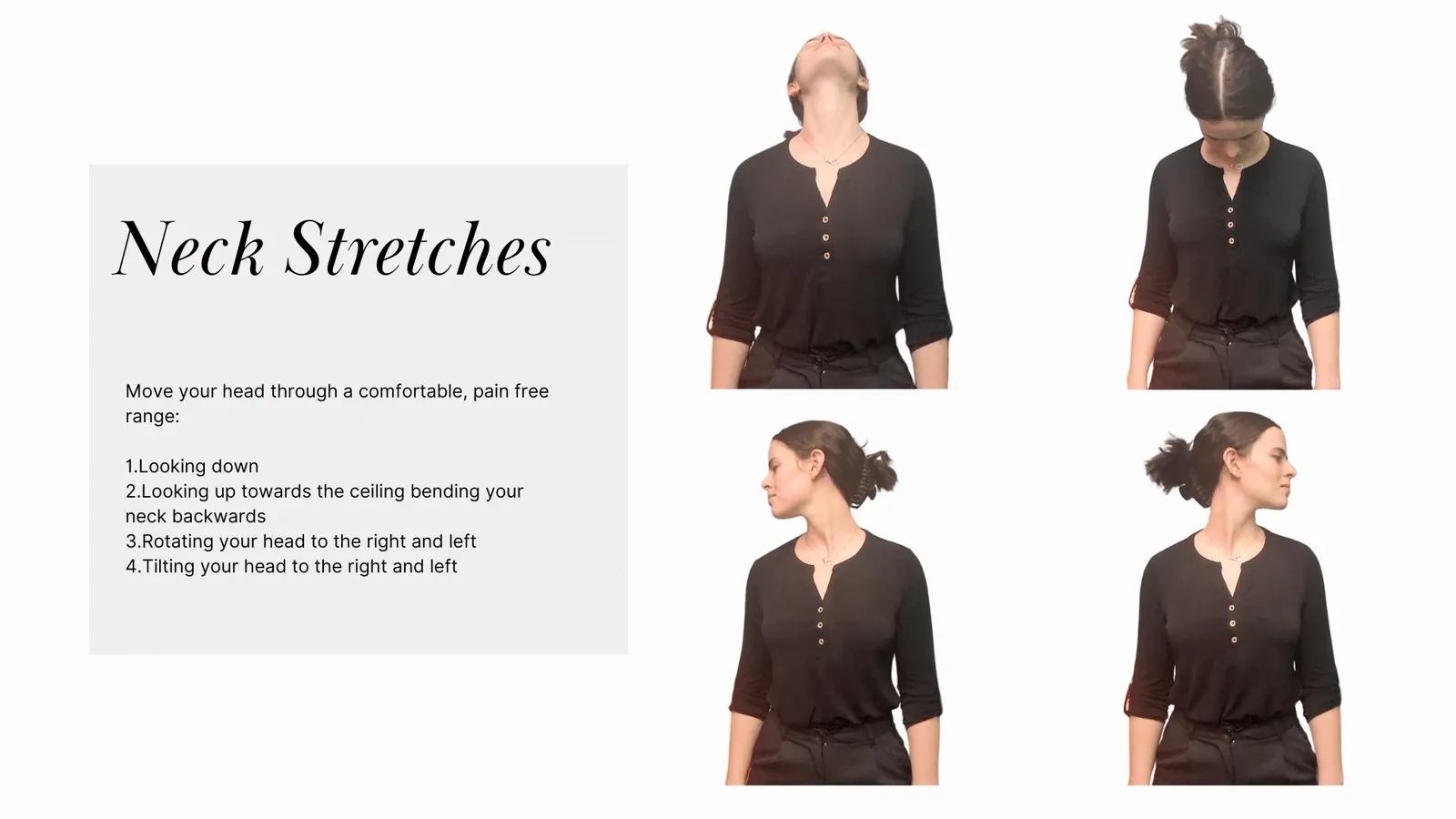
Neck stretches
Move your head through a comfortable, pain-free range. Go through these four movements:
- Look down.
- Look up toward the ceiling, bending your neck backward.
- Turn your head to the right and left.
- Tilt your head to the right and left.
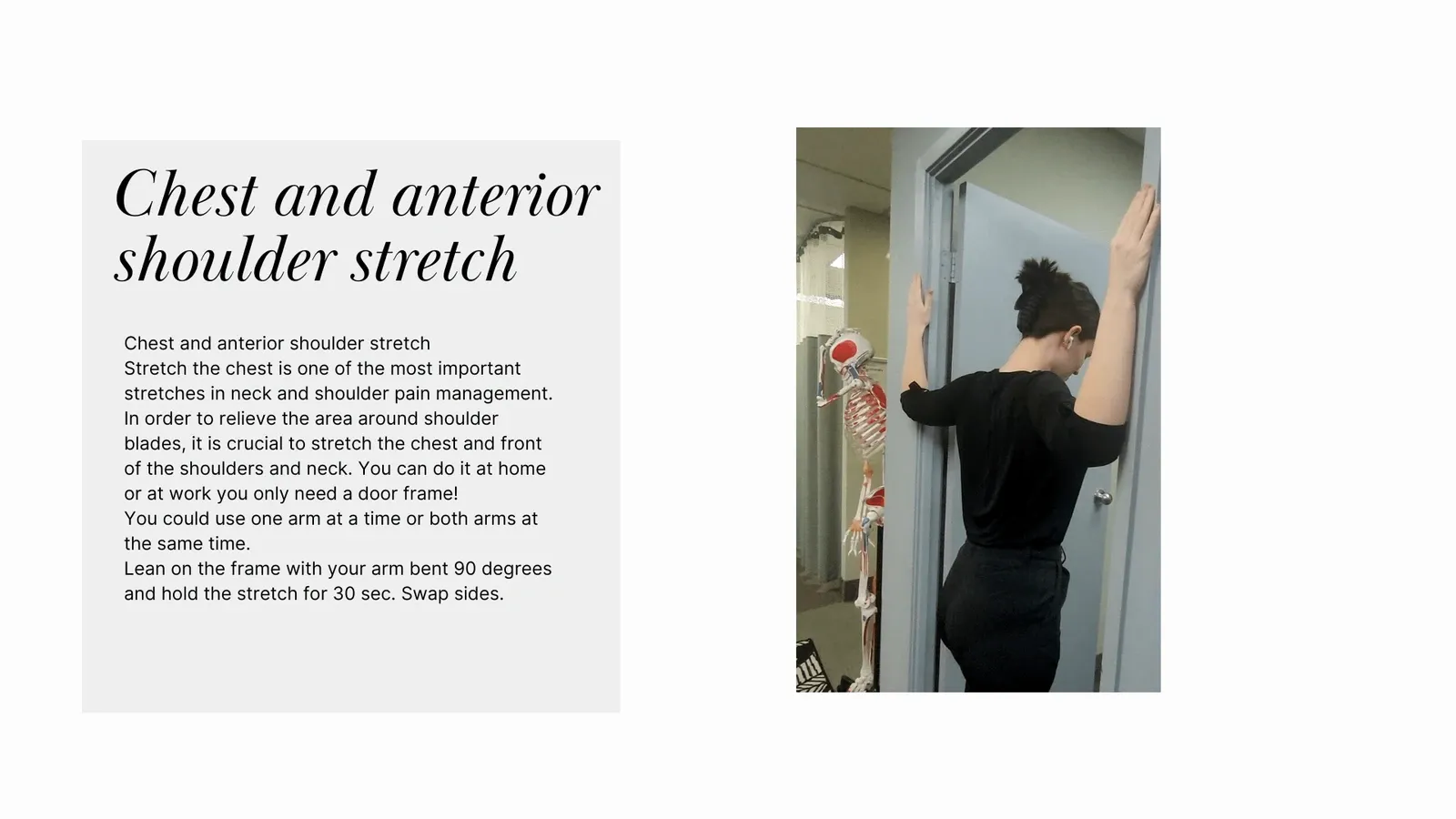
Chest and anterior shoulder stretch
Stretching your chest is one of the most important stretches for managing neck and shoulder pain. To relieve the area around your shoulder blades, it’s crucial to stretch your chest and the front of your shoulders and neck.
You can do this stretch at home or at work, and all you need is a door frame! You can use one arm at a time or both arms at once.
Lean on the frame with your arm bent 90 degrees and hold the stretch.
Hold 30 seconds, then swap sides.
Benefits of physiotherapy for text neck pain
If you’re struggling with neck pain from using your computer or smartphone, it may be time to book an appointment with a physiotherapist to help you develop an individualized treatment plan that aims to improve pain and prevent recurrences.
Physiotherapy treatment for text neck pain comprises joint mobilization, massage therapy, stretches, and exercises. The physiotherapist would teach you postural techniques to reduce the pain and strains and tightness of muscles and help your body to move freely.
More from the blog
-
TMJ Relief
TMJ, or temporomandibular joint disorder, is a common condition that can cause pain and discomfort in the jaw and face.
-
Plantar Fasciitis Treatment
Are you feeling like you’ve got a rock in your shoe, even when you’re not wearing any? Do you dread getting out of bed in the morning because of that sharp pain in your heel?
-
Decompression Table Therapy
Back pain is a common problem affecting millions of people worldwide. While there are several ways to manage it, one of the most effective is through the use of a spinal decompression table.