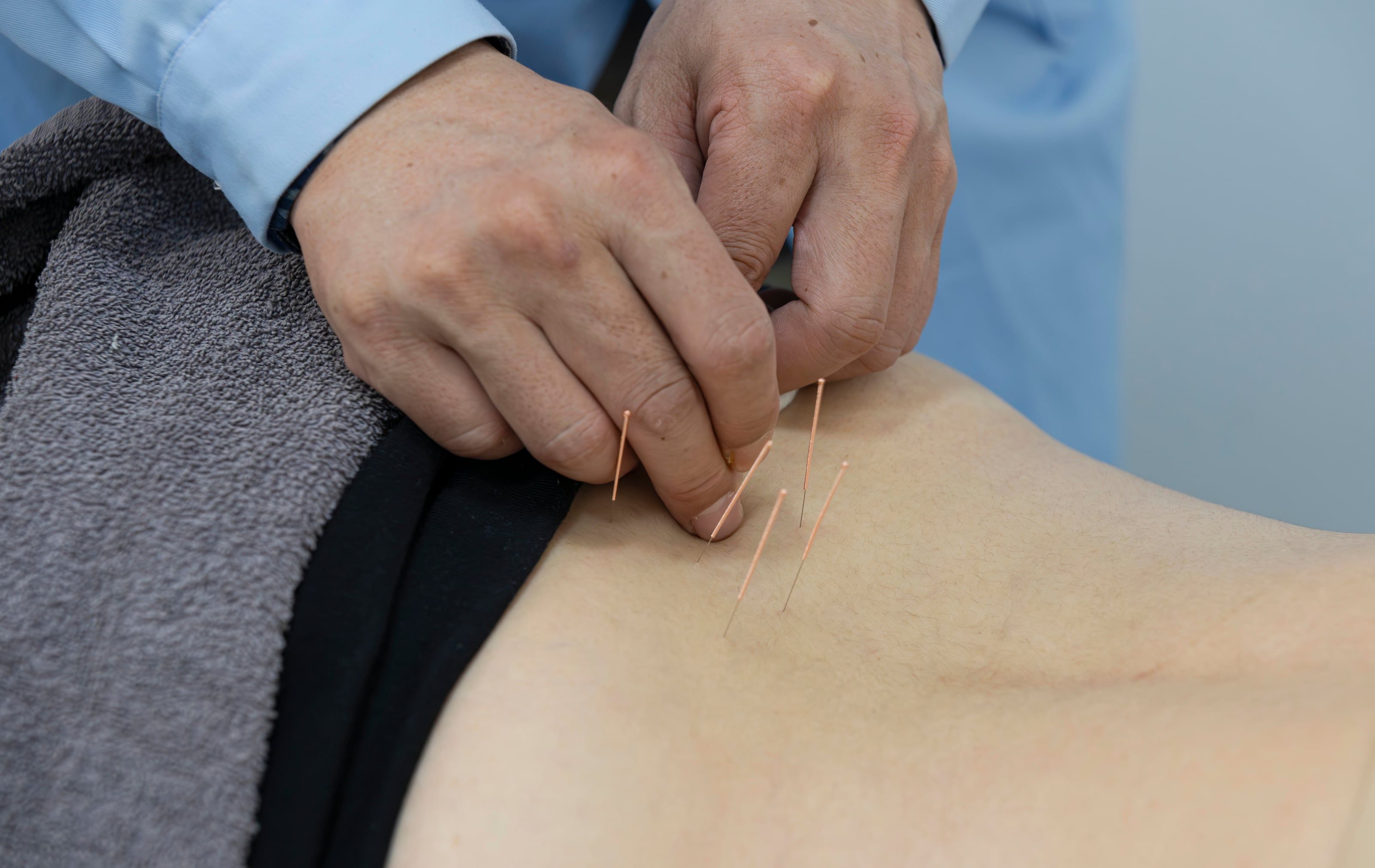
Find where it's stiff.
Your physiotherapist tests how each joint moves, one at a time, to find where movement is limited or sore.

Physiotherapy, by hand.
The hands-on part of physiotherapy: your physiotherapist moves stiff joints and releases tight muscles. Then they show you how to keep the movement.

European Massage & Physiotherapy Center offers manual physiotherapy in Mississauga at 1140 Burnhamthorpe Road West. Manual therapy is the hands-on side of physiotherapy: our registered physiotherapists use their hands to move stiff joints and release tight muscles and other soft tissue. It is commonly used for back, neck, shoulder, hip and knee pain and stiffness. You don't need a doctor's referral. Book online or call (905) 270-5553.
There are three main techniques. Joint mobilization moves a joint slowly and repeatedly, a little further each time. Joint manipulation is a single small, quick movement, sometimes with a click. Soft-tissue release uses sustained pressure and stretching on tight muscles, tendons and fascia. Together they aim to ease pain and restore movement, so that exercise is easier to do.
Manual therapy may suit you if a joint feels stiff or stuck, if movement is limited after an injury or surgery, or if your neck or back stiffens up after long hours at a desk. Hands-on work is usually paired with a few exercises to help you keep the movement you've gained.
Manual therapy is part of physiotherapy sessions, so visits follow the same lengths: a 60-minute initial assessment, then follow-ups of 30, 45 or 60 minutes. At the assessment, your physiotherapist tests how each joint moves, including the joints above and below the sore one, and feels for stiffness and tightness in the tissue around it.
Because manual therapy is part of physiotherapy, it falls under your plan's physiotherapy coverage. Many extended health plans cover physiotherapy, and we can bill many insurers directly. Massage therapy, chiropractic, acupuncture and osteopathy are also available at the same clinic.

Your physiotherapist tests how each joint moves, one at a time, to find where movement is limited or sore.
Hands-on work aims to ease pain and restore movement, and an exercise afterwards helps you keep it.
Your physiotherapist explains what they'll do and why, and changes or stops a technique if it's uncomfortable.
Movement and pain are checked again at each visit, so you and your physiotherapist can see what's changing.
How an appointment usually goes, step by step.
Your physiotherapist asks where it hurts, what makes it better or worse, and what you've tried so far.
They move each joint gently to feel how far it goes and where it's stiff or sore, and check the muscles around it.
Mobilization, manipulation or soft-tissue release, chosen for what they find and explained before they start.
A short exercise to hold on to the movement between visits. Follow-ups are 30, 45 or 60 min.

Manual Physiotherapy pairs naturally with the rest of our care for a wide range of musculoskeletal complaints.
Each one links to their profile, where you can book with them.
Manual therapy is one part of physiotherapy: the hands-on part, such as joint mobilization, manipulation and soft-tissue release. A physiotherapy plan often combines it with exercise and other treatment. When the main problem is a stiff joint or tight tissue, hands-on work may take up more of the session.
Mobilization moves a joint slowly and repeatedly, and you can ask your physiotherapist to stop at any point. Manipulation is a single small, quick movement, sometimes with a click or pop. Your physiotherapist chooses between them for the joint and the problem, and only with your agreement.
It may be a little uncomfortable over a stiff or sore area, but it shouldn't be painful. Your physiotherapist explains each technique first and eases off if it's too much. Some people feel a little sore the next day.
No. In Ontario you can see a physiotherapist without a referral. Some insurance plans want a doctor's note before they pay for physiotherapy, so check your plan.
Manual therapy is part of physiotherapy, so it falls under your plan's physiotherapy coverage. Many extended health plans cover physiotherapy, and we can bill many insurers directly.