Questions first.
Each session starts with a few questions about your health, where it hurts and what you'd like from the massage.
The quiet practice of touch.
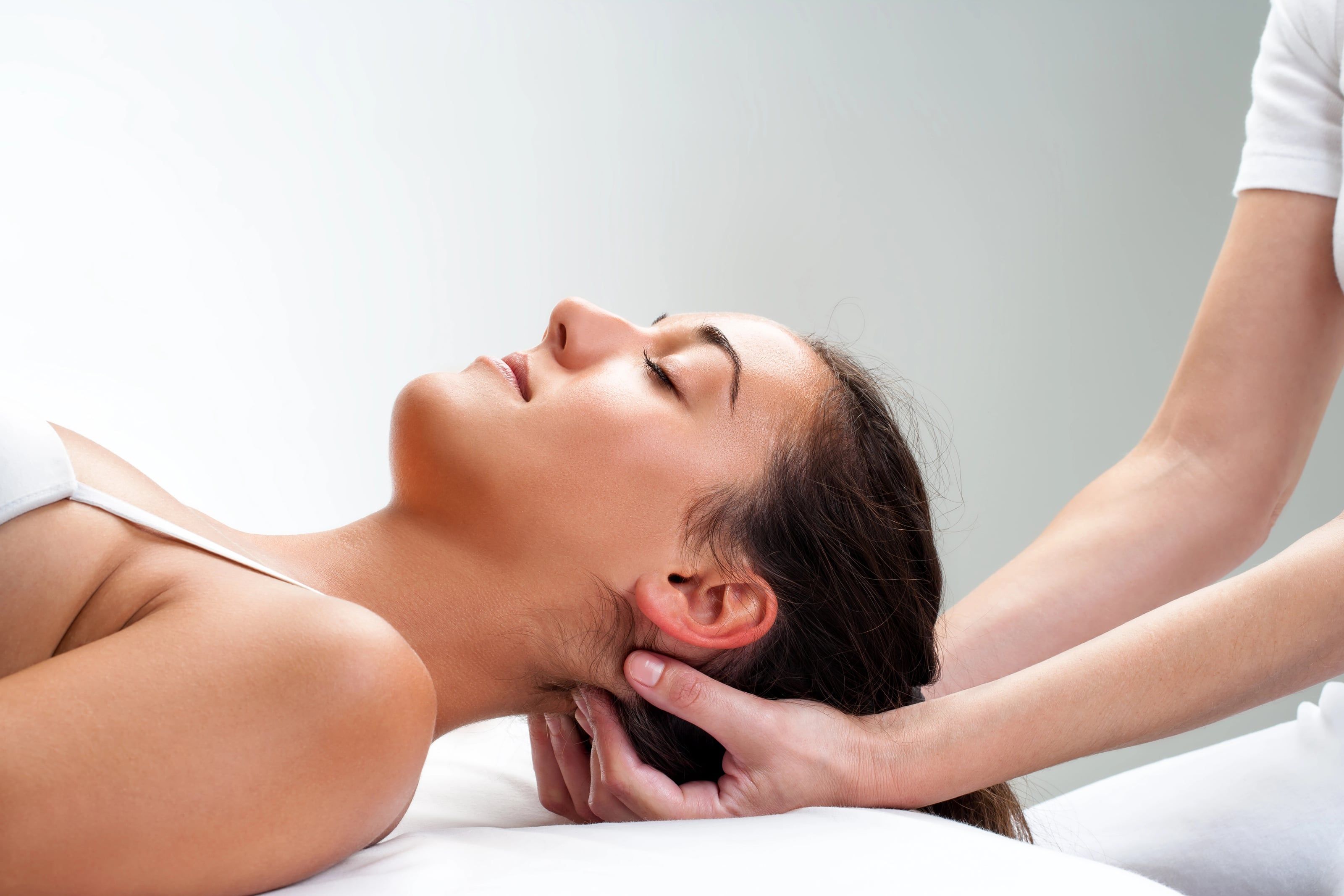
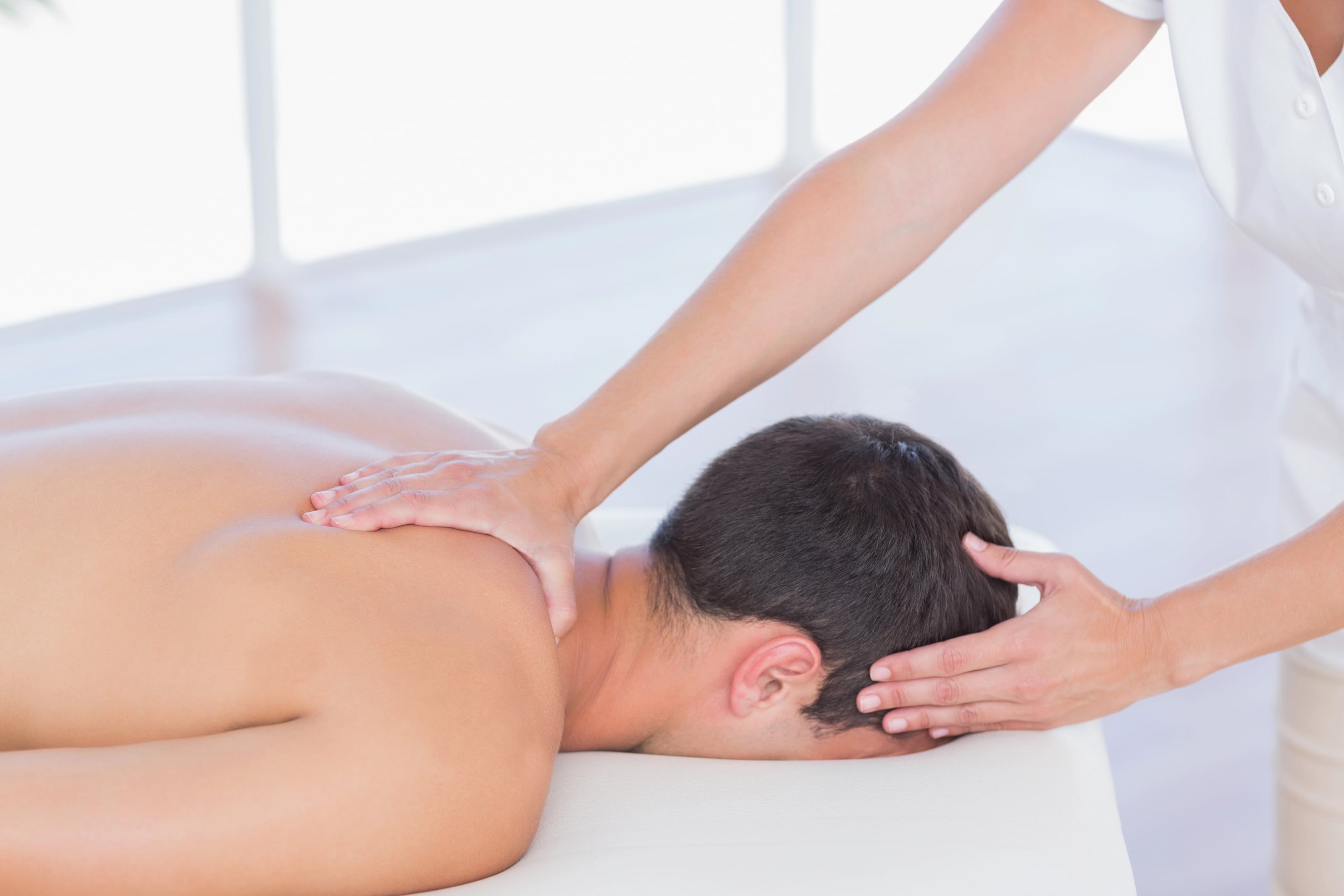
Registered massage therapists who ask what's bothering you, then choose the technique and pressure that suit you.
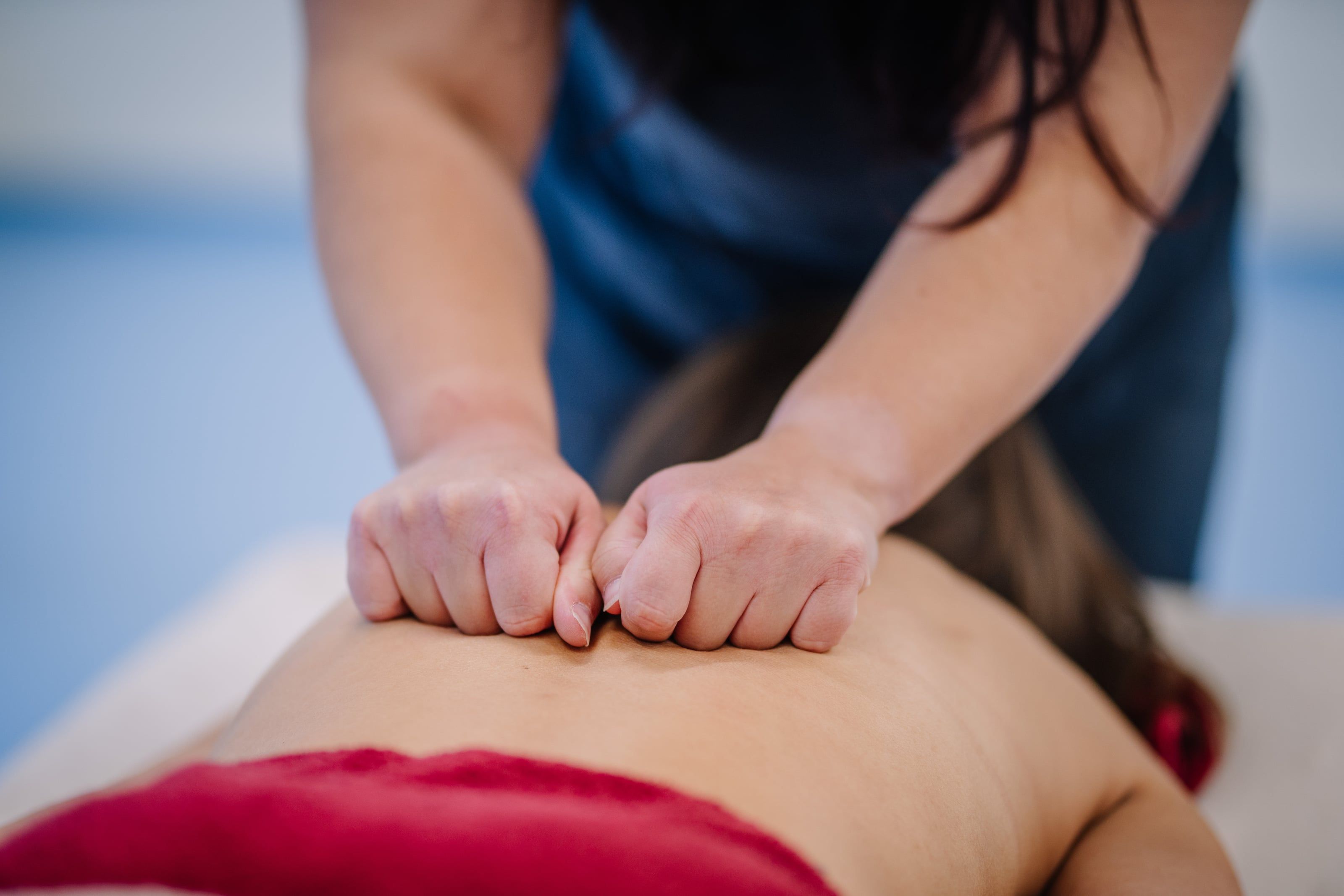
European Massage & Physiotherapy Center offers massage therapy in Mississauga at 1140 Burnhamthorpe Road West. Our registered massage therapists (RMTs) treat sore, tight muscles in the back, neck, shoulders and hips, tension from desk work or stress, and soreness after sport, an injury or a car accident. You don't need a doctor's referral. Book online or call (905) 270-5553.
Appointments are 30, 45, 60, 75 or 90 minutes. A shorter one suits a single area, such as the neck and shoulders; a longer one leaves time for several. At the start, your therapist asks about your health and what you'd like from the session, and checks how the sore area moves. They tell you what they plan to do, and you can change the pressure or stop at any time.
Your therapist chooses from deep tissue massage, trigger point therapy, Swedish massage, and relaxation or therapeutic massage, and often mixes them. Deep tissue massage uses slow, firm pressure on the deeper layers of muscle. Trigger point therapy presses on tight, tender knots that can send pain to other areas. Swedish massage uses long, flowing strokes and is often chosen for relaxation.
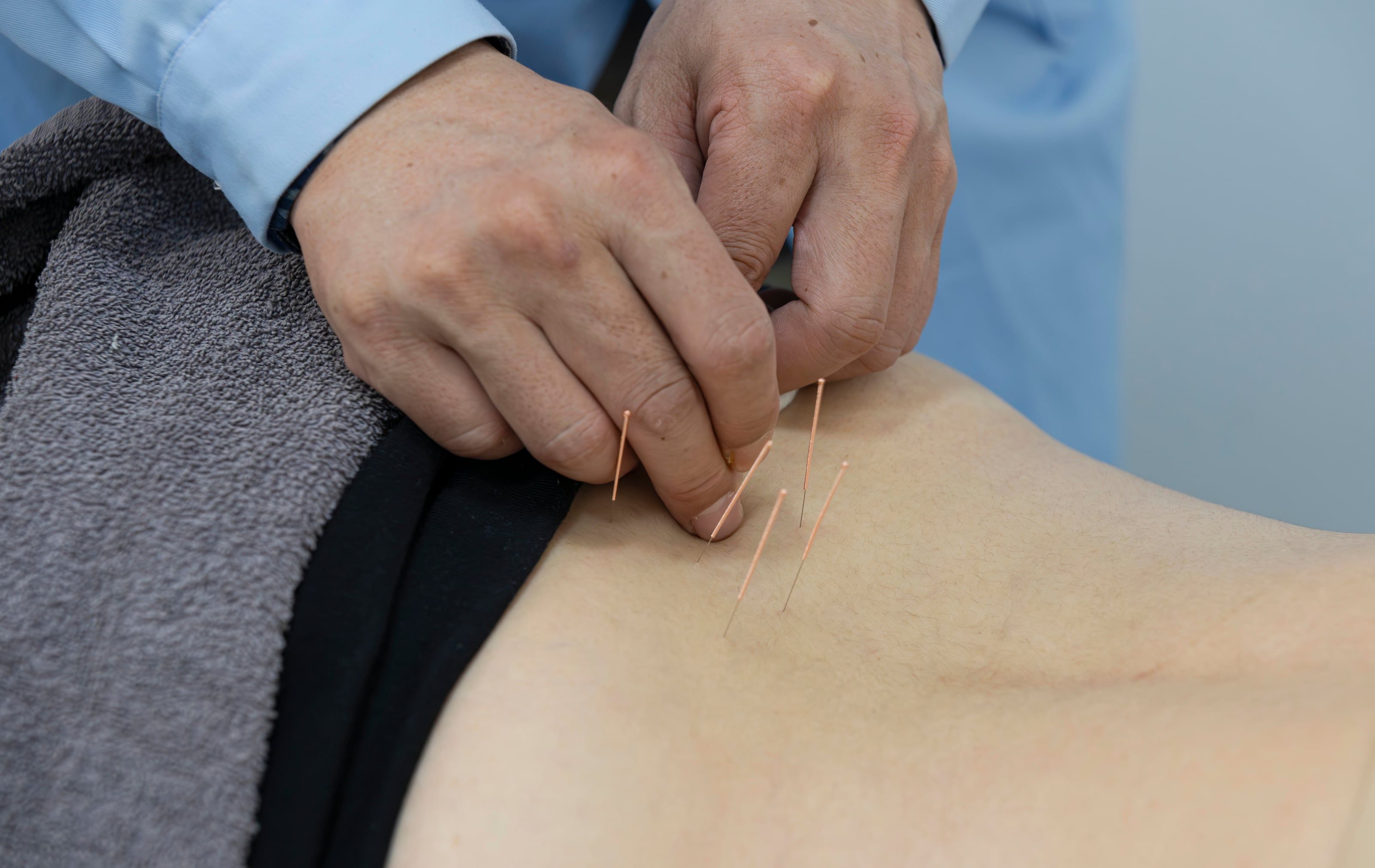
You can book massage therapy on its own or alongside physiotherapy, chiropractic, acupuncture or osteopathy, which are all available at the same clinic.
Many extended health plans cover massage therapy, and we can bill many insurers directly. Some plans ask for a doctor's note before they pay, so check yours before your first visit. After a car accident, your auto insurance may pay for treatment.
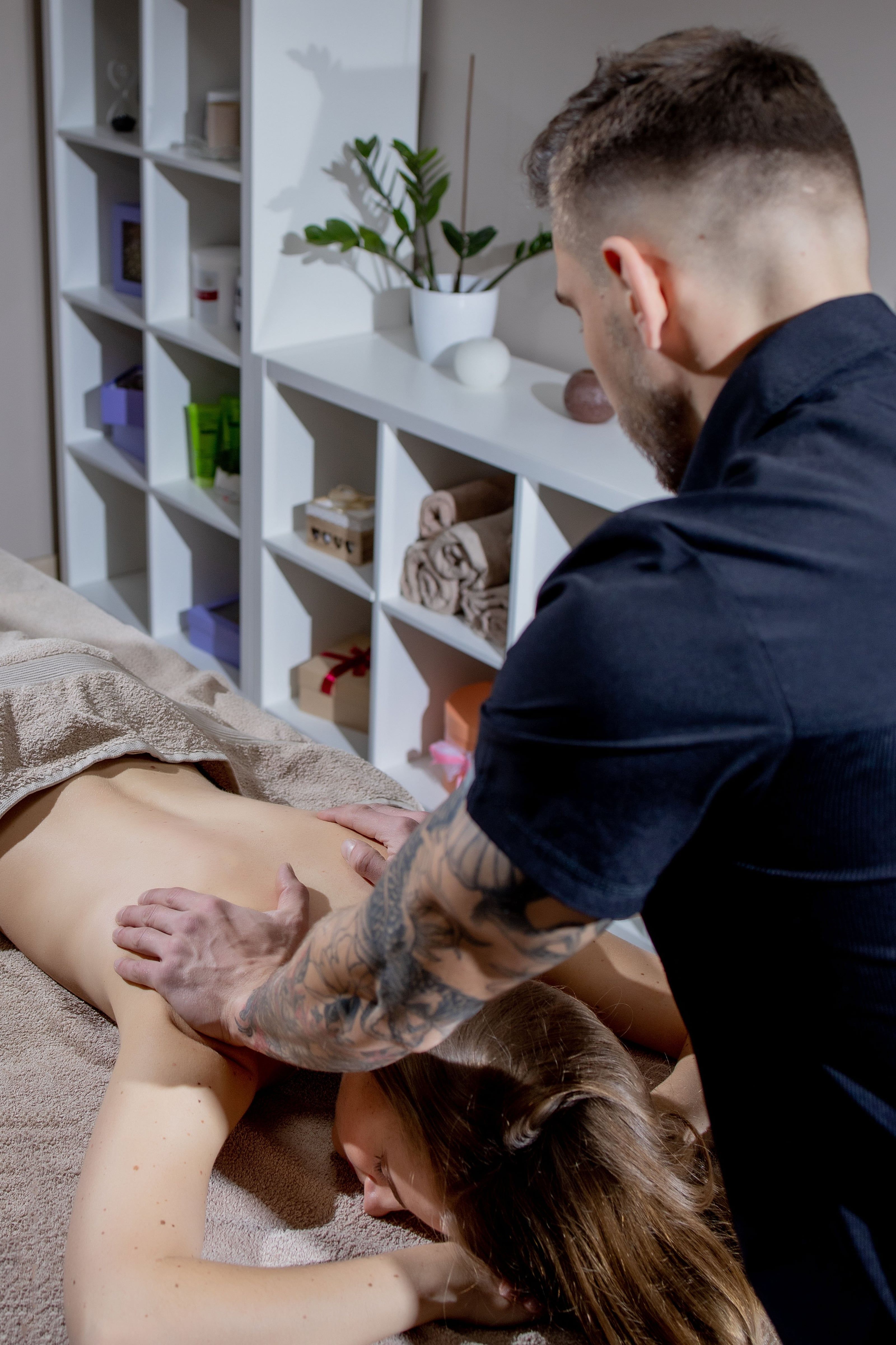
Each session starts with a few questions about your health, where it hurts and what you'd like from the massage.
Your therapist checks the pressure with you as they work, and you can ask for more or less at any time.
Deep tissue, trigger point or Swedish work is chosen for how your muscles feel on the day, not from a fixed routine.
You decide which areas are treated, you stay covered by a sheet except where your therapist is working, and you can stop at any time.
How an appointment usually goes, step by step.
Your therapist asks about your health, any injuries or medications, and what you'd like from today's session.
They look at how the sore area moves and feel for tight or tender spots before they begin.
You undress to your comfort level and lie under a sheet. Your therapist uncovers only the area they're working on and checks the pressure with you.
Your therapist may suggest a stretch, heat or ice to try at home, and when it might help to come back.

Massage Therapy pairs naturally with the rest of our care for a wide range of musculoskeletal complaints.
Each one links to their profile, where you can book with them.
 Ansen LiuuMassage Therapist
 Zofia BabijMassage Therapist
 Joanna SousMassage Therapist
 Agnieszka ZielinskaMassage Therapist
 Mekia DixonMassage Therapist
 Bozena PiorkowskaMassage Therapist
 Tomasz GoralskiMassage Therapist
 Elizabeth CichowiczMassage Therapist
 Myroslava ZakharchenkoMassage Therapist
 Petar MileticMassage Therapist
 Razvan AndriesMassage Therapist
 Steve HoughMassage Therapist
No. In Ontario you can book a registered massage therapist directly. Some extended health plans want a doctor's note before they pay for massage therapy, so check yours if you plan to claim.
You can book 30, 45, 60, 75 or 90 minutes. A shorter session suits one area, such as the neck and shoulders; a longer one leaves time to work on several areas.
Swedish massage uses long, flowing strokes with lighter pressure and is often chosen for relaxation. Deep tissue massage uses slower, firmer pressure to reach deeper muscle and is often used for stubborn tightness. Your therapist can combine the two and will check the pressure with you.
It can feel intense over tight spots, but it shouldn't be more than you can breathe and relax through. Tell your therapist if the pressure is too much and they'll ease off. Some people feel a little sore the next day.
Many extended health plans cover massage therapy by a registered massage therapist, and we can bill many insurers directly. After a car accident, your auto insurance may pay for treatment.