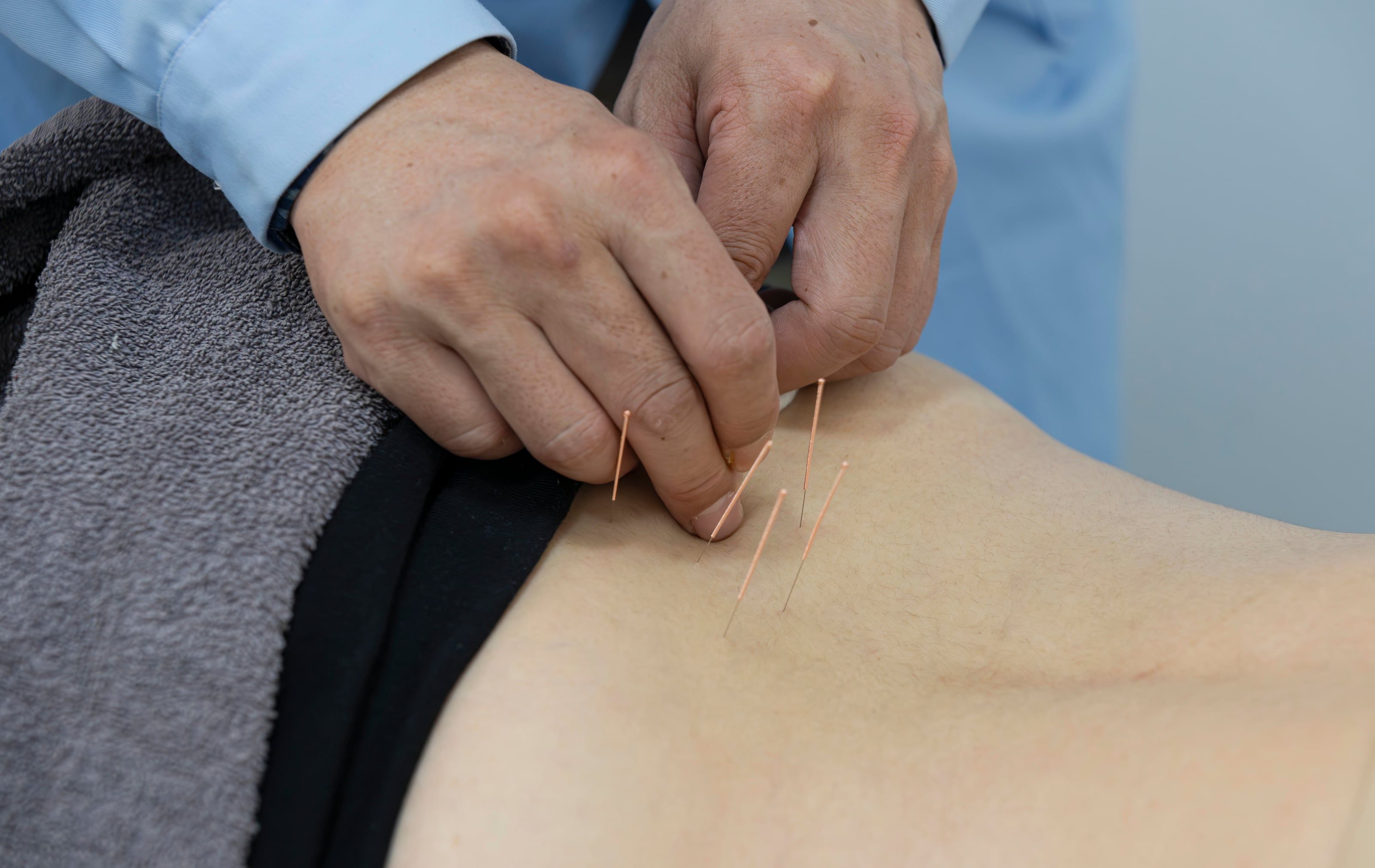
Assessment before tape.
Your physiotherapist works out what's injured and what needs support before choosing the tape and how to apply it.
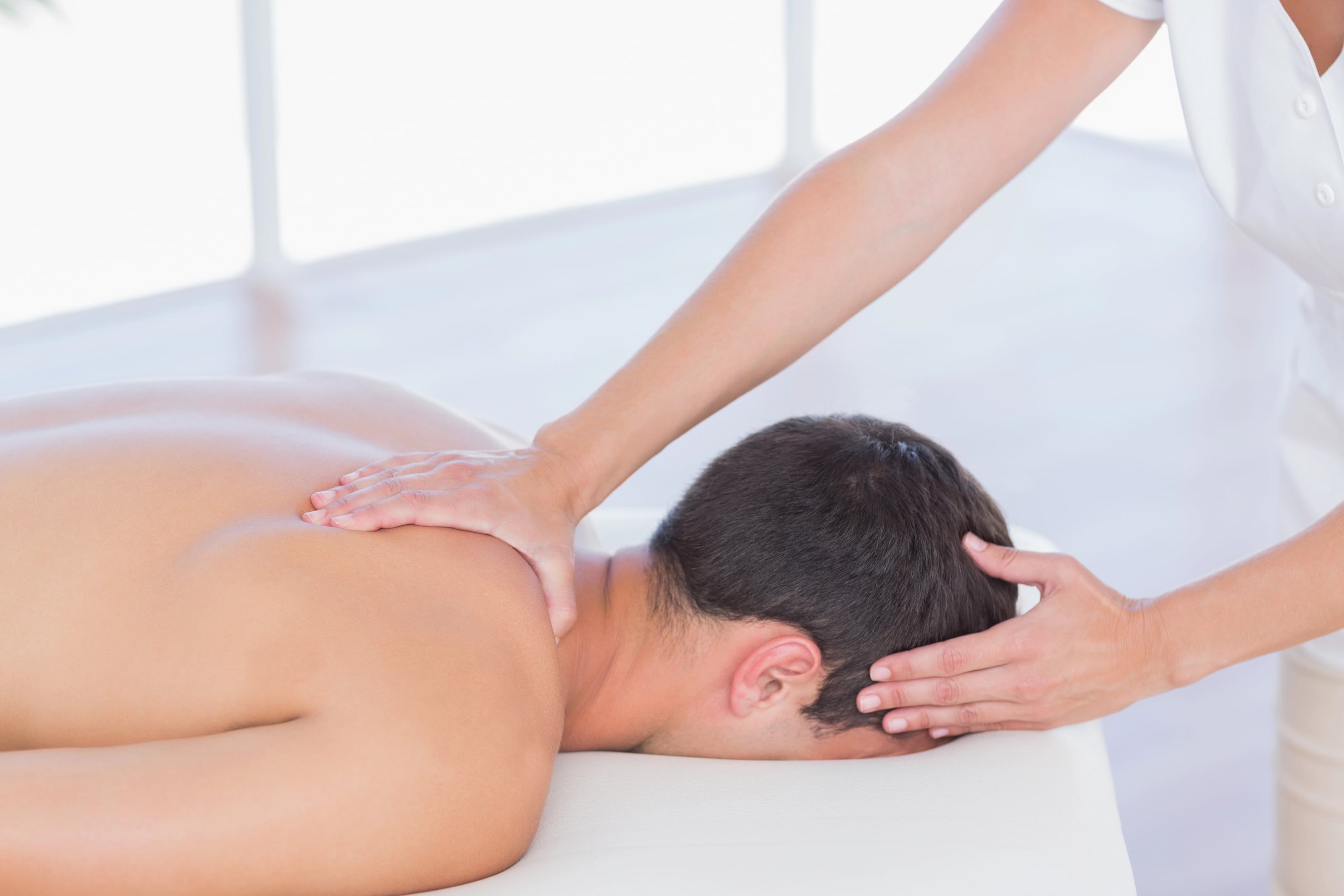
Support that moves with you.
Kinesiology or physio tape, applied by your physiotherapist to support a sore joint or muscle while you stay active.
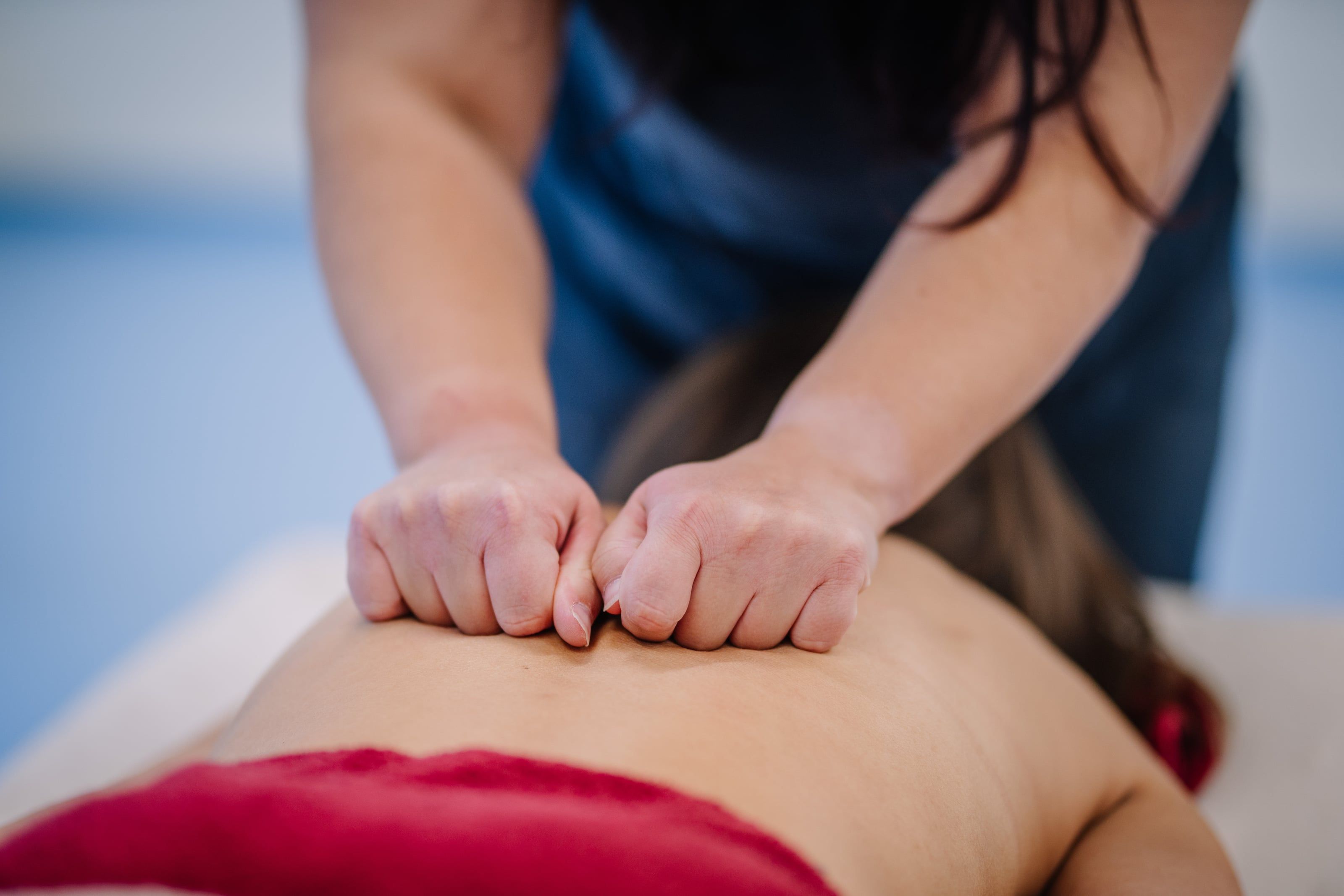
European Massage & Physiotherapy Center offers physio taping in Mississauga at 1140 Burnhamthorpe Road West. Our physiotherapists use kinesiology or physio tape for sports injuries and to support a sore shoulder, knee, ankle or foot during activity, as part of physiotherapy. You don't need a doctor's referral. To start, book a physiotherapy assessment online or call (905) 270-5553.
There are two broad kinds of tape. Kinesiology tape is thin and stretchy, moves with your skin, and is often worn for a few days at a time. Firmer physio tape holds a joint more firmly and is usually worn for an activity and then taken off. Your physiotherapist chooses the tape, and the way it's applied, to suit the problem.
Taping aims to support an injured or irritated area, ease strain on sore tissue, and help you keep moving while it recovers. It's one part of treatment rather than a treatment on its own, used alongside exercises and hands-on work. For some problems, your physiotherapist may also suggest shockwave therapy, cold laser therapy or the Graston technique.
Your first physiotherapy visit is a 60-minute initial assessment, and follow-ups are 30, 45 or 60 minutes. Tape is applied during these sessions. It needs clean, dry skin to stick, so skip lotion on the area that day. Tell your physiotherapist if tape or plasters have irritated your skin before.
Physio taping is part of physiotherapy. Many extended health plans cover physiotherapy, and we can bill many insurers directly. Some plans ask for a doctor's note before they pay, so check yours.
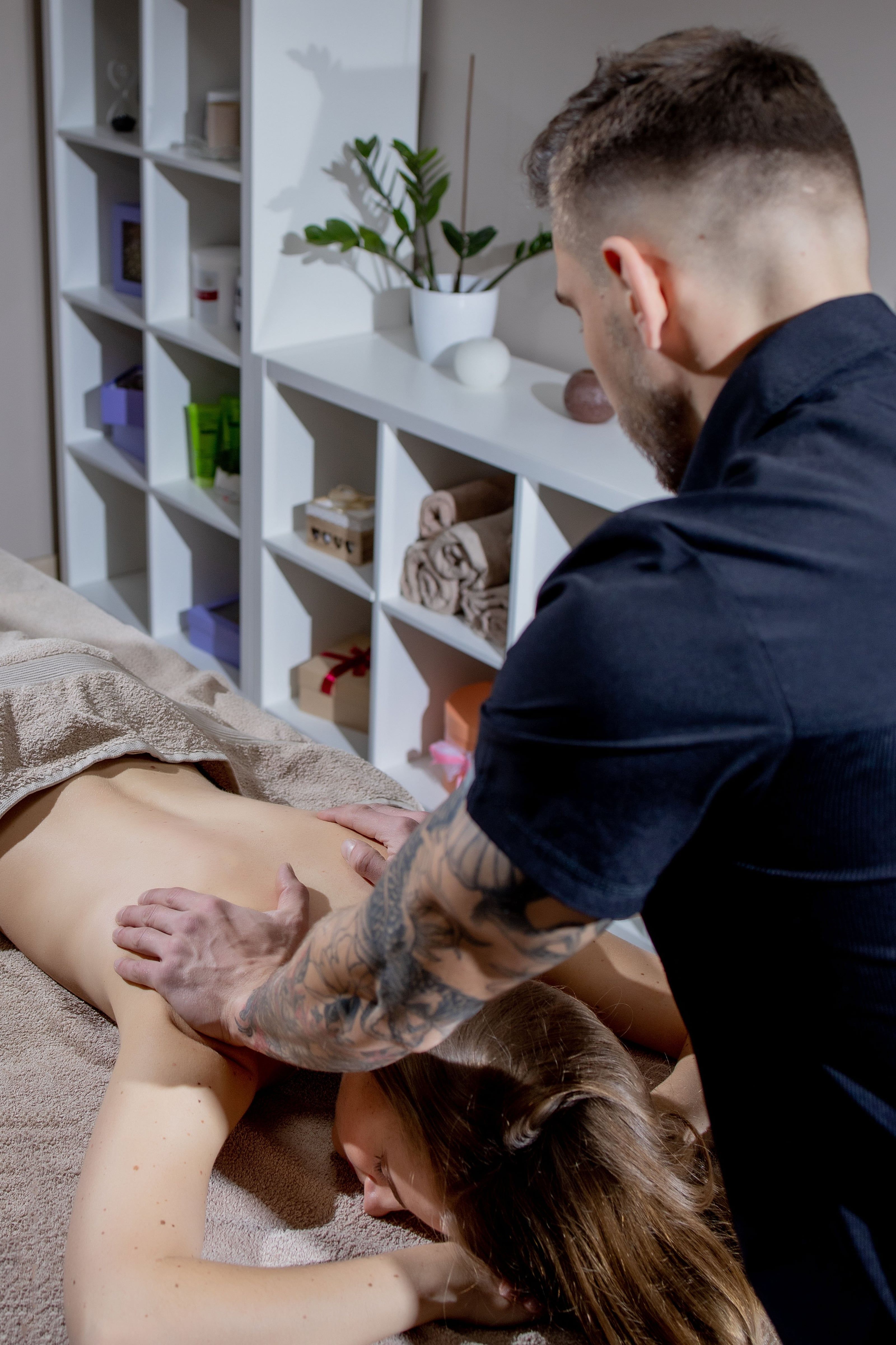
Your physiotherapist works out what's injured and what needs support before choosing the tape and how to apply it.
Stretchy kinesiology tape for support that moves with you, or firmer physio tape when a joint needs holding more firmly.
Tape supports the area while exercises and hands-on treatment work on the problem itself.
We ask about skin sensitivity first, and you'll know how long to wear the tape and when to take it off early.
How an appointment usually goes, step by step.
Your first physiotherapy visit looks at the injury, how you move, and what you need to get back to, such as sport or work.
The skin is cleaned and dried so the tape sticks. Hair may be trimmed where the tape will go.
Your physiotherapist applies strips in a set pattern and stretch, then checks how the area feels as you move.
You leave knowing how long to keep it on, how to care for it and how to take it off, along with exercises to do at home.

Physio Taping pairs naturally with the rest of our care for a wide range of musculoskeletal complaints.
Each one links to their profile, where you can book with them.
It's commonly used after sports injuries such as ankle sprains, for knee pain around the kneecap, for shoulder problems, and to support the foot and ankle during activity. It aims to support the area and ease strain on sore tissue while you keep moving.
It depends on the tape and the reason for it. Kinesiology tape is often left on for a few days, and you can usually shower with it. Firmer physio tape is usually taken off after the activity. Take any tape off sooner if your skin itches, stings or goes red.
Peel it off slowly in the direction the hair grows, pressing the skin down just behind it as you go. Soaking it with a little oil first can make it easier. If the skin underneath is sore or broken, let your physiotherapist know.
Taping is done as part of physiotherapy. Many extended health plans cover physiotherapy, and we can bill many insurers directly. You don't need a doctor's referral, though some plans ask for a doctor's note before they pay.